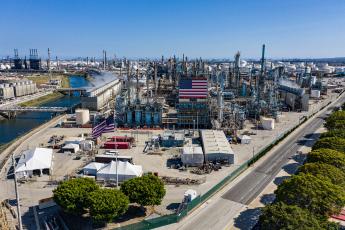
Geopolitical conflicts, refinery outages, export restrictions and supply chain disruptions have reduced the world's ability to convert crude oil into usable fuels, even as global consumer demand remains strong. The following perspectives from analysts and reporters help explain why fuel prices today aren’t moving in lockstep with crude oil prices, and why refining capacity has become one of the most important factors shaping what consumers pay at the pump:
“While several factors are contributing to the differential trends between crude and product prices, the overwhelming reason is that global supply and demand is much tighter in product markets than crude markets.”
– Lisa Shidler, RBN Energy, The factors keeping refined product prices high, even as crude prices fall
“Oil needs to be refined into products and fuels people can use, including asphalt, plastic, heating oil, jet fuel, diesel and gasoline… But the world’s refining capacity is deeply constrained. That’s in part because the supply chain got messed up during the war. It’s also because Iran attacked dozens of Middle Eastern refineries. And, more recently, Ukraine started blowing up Russian energy facilities.”
– David Goldman, CNN, The world no longer has an oil problem. It has a gasoline problem.
“What matters to consumers and the broader economy is the price of refined fuels, not simply the price of crude oil. Oil prices are important, but at the moment, what matters even more is the capacity of the global refining industry to convert crude oil into usable products.”
– James Rogan, Washington Examiner, The refined fuel shortage, not oil prices, is what matters
“…refining capacity in two major fuel-export regions — the Middle East and Russia — has been severely curtailed by conflict. Global refineries processed 5.1 million fewer barrels a day in the second quarter compared with the same period in 2025, according to the IEA.
“Middle Eastern refiners’ major export path is bottlenecked by Strait of Hormuz disruptions, and some facilities have been damaged by Iranian strikes… In Russia, the world’s second largest fuel exporter, more than a quarter of refining capacity has been knocked offline by Ukrainian drones.”
– Jinjoo Lee, Wall Street Journal, Gas prices will stay higher for longer, even if oil falls
“The International Energy Agency warned… that the market for refined petroleum products will continue to tighten, largely for reasons outside Trump’s control. Ukraine’s ongoing string of drone attacks on refineries in Russia has slashed the latter’s refining capacity by 30% and forced Moscow to ban diesel exports. China has also restricted exports, and refineries in the Gulf are still running far below their norm. Altogether, at least 10% of global refining capacity is offline, Bloomberg reported.”
– Tim McDonnell, Semafor, U.S. gas price relief remains elusive
“And then there’s diesel. The Middle East may have reopened, but one of the world's largest diesel suppliers [Russia] continues to lose refining capacity… Every barrel of diesel that disappears from the export market tightens supplies elsewhere.”
– Julianne Geiger, OilPrice.com, Oil refiners are cashing in on a market that won’t stay broken
The American Fuel & Petrochemical Manufacturers (AFPM) is the leading trade association representing the makers of the fuels that keep us moving, the petrochemicals that are the essential building blocks for modern life, and the midstream companies that get our feedstocks and products where they need to go. We make the products that make life better, safer and more sustainable — we make progress.